


Introduction
Every plant has that one valve nobody talks about, until it fails. It’s usually not the big, expensive equipment that causes trouble. It’s a small leak at a valve stem, slowly letting fluid seep into places it was never meant to reach. A little corrosion here, a bit of contamination there, and suddenly a routine day turns into an unplanned shutdown.
This is exactly the problem a Saunders diaphragm valve was built to solve. Instead of a stem pushing through a seal, it uses one flexible diaphragm to open and close the flow, keeping the fluid completely away from the valve’s moving parts. No stem, no leak path, no slow wear and tear. It sounds like a small change, but it’s the reason this valve has been trusted in plants for close to a hundred years and why it still holds up against far newer designs. In this article, we’ll break down exactly how it works, why it’s built the way it is, and where it makes the biggest difference on a plant floor.
What Are Saunders Diaphragm Valves?
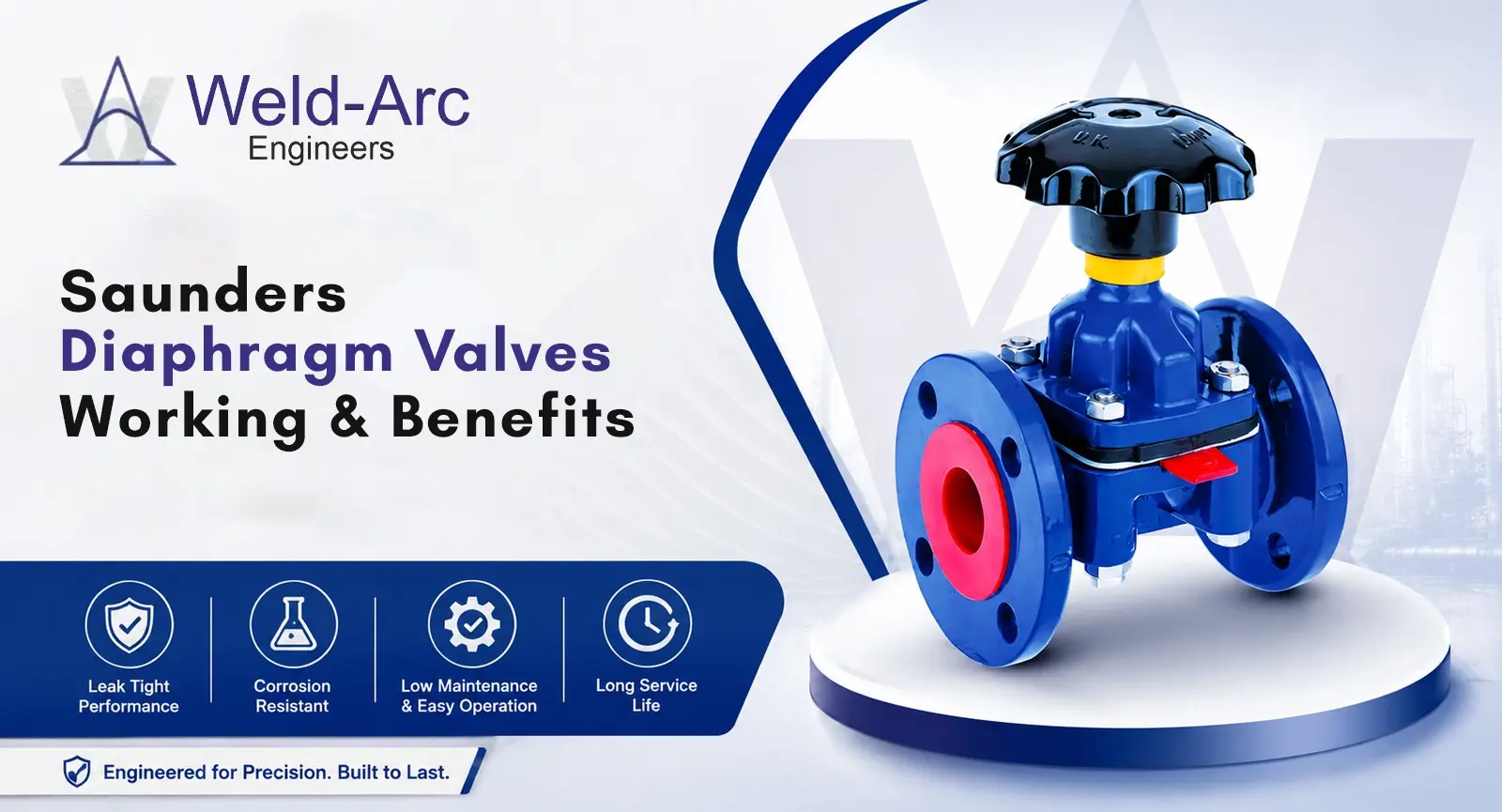
A Saunders diaphragm valve does the same basic work as any other valve, but it goes about it more smartly:
- It opens, closes, or throttles flow just like a regular valve, but uses a flexible diaphragm instead of a stem and plug placed directly in the fluid.
- A compressor presses the diaphragm down onto a raised weir or straight onto the valve body; push it down, the flow stops; lift it, the flow moves again.
- The diaphragm acts as a shield. It is placed between the fluid and the rest of the valve, so parts like the bonnet, stem, and compressor never touch whatever is flowing through the line.
- It works the same way regardless of the fluid: a harsh acid, a slurry loaded with solids, or a sterile pharmaceutical liquid all get handled without wearing down the internal parts.
- The body and diaphragm aren’t one-size-fits-all. They’re chosen based on the fluid’s temperature, pressure, solids content, cleanliness needs, and how often the valve gets cycled.
In short, the Saunders Diaphragm Valve does the heavy lifting so the rest of the valve doesn’t have to, which is exactly why this design has stayed relevant across so many industries for so long.
How Saunders Diaphragm Valves Work
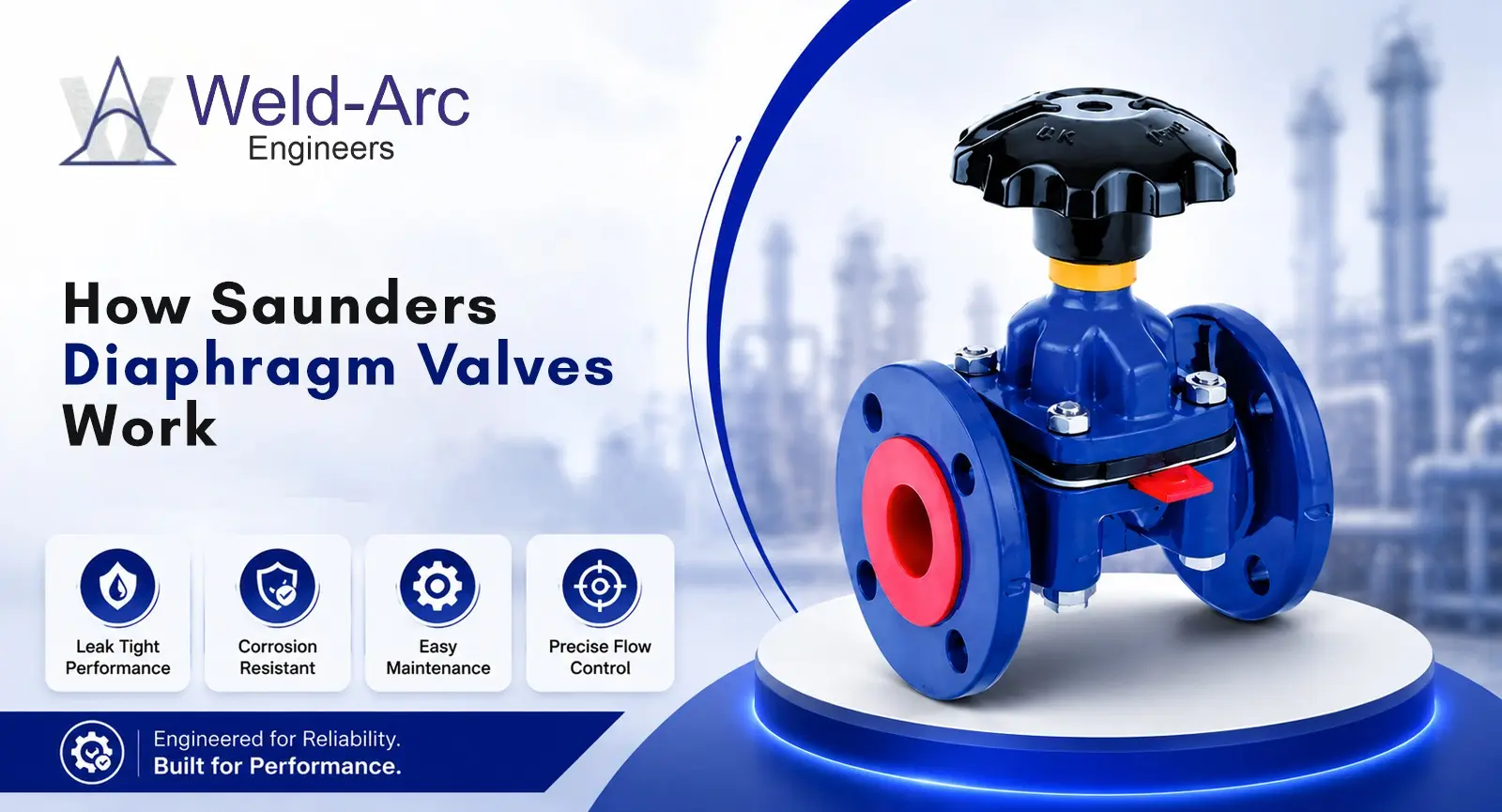
The working principle of this valve is very simple, but the details matter when choosing a valve for industrial use. The working of this valve is as follows:
Opening of valves
The compressor is moved away from the diaphragm by turning the handwheel, actuator, or pneumatic operator. The diaphragm is raised from the weir or body seat to create a passageway for the process fluid.
The amount of lifting determines the available flow area. Partial movement can therefore be used for throttling, while full movement allows the Saunders Diaphragm Valves to operate in an open position.
Closing the valve
During closing, the compressor pushes the flexible diaphragm downward. The diaphragm contacts the weir or sealing surface and stops the flow path. Because the diaphragm is flexible, it can conform to the sealing area and compensate for small irregularities.
Saunders Diaphragm Valves describes the valves as capable of leak-tight closure under pressure and vacuum, including after repeated operation. This feature is particularly useful when preventing product loss, emissions, contamination, or exposure to hazardous media.
Isolating the operating mechanism
The diaphragm separates the process fluid from the stem and bonnet assembly. This reduces the risk of corrosion in the operating mechanism and eliminates the need for packing that is directly exposed to the line medium.
It also means that the valve can handle fluids containing suspended particles more effectively than some conventional valve designs. However, the diaphragm material must still be matched carefully with the process conditions.
How Saunders Diaphragm Valves Compare to Other Valve Types
Most engineers specifying a valve aren’t choosing in a vacuum; they’re weighing a diaphragm valve against gate, ball, or globe valves for the same application. Understanding where each one genuinely differs makes that comparison a lot more useful than reading specs in isolation.
| Factor | Saunders Diaphragm Valve | Gate Valve | Ball Valve |
| Sealing mechanism | Flexible diaphragm against a weir | Metal gate lowered into flow path | Rotating ball with a bore |
| Exposed stem packing | None | Yes | Yes |
| Best suited for | Corrosive, hygienic, or particulate-heavy fluids | General on/off service, larger pipe sizes | Quick shutoff, moderate to high pressure |
| Typical maintenance | Diaphragm replacement | Seat and packing repair | Seal and seat replacement |
| Pressure range | Low to moderate | Wide range, including high pressure | Wide range, including high pressure |
The table makes one thing clear fairly quickly: a diaphragm valve isn’t trying to compete with a ball valve on pressure rating or a gate valve on raw size. It’s solving a different problem: reliable sealing without exposing mechanical components to the fluid, which matters most in applications where leakage or contamination carries real consequences.
Where This Valve Gets Specified Most Often
A handful of industries treat this valve type as a default, not an exception:
- Pharmaceutical manufacturing, where no exposed packing means no hidden crevice for contamination to hide in
- Chemical processing, where PTFE-lined diaphragms handle fluids that would eat through most other valve seals within months
- Water treatment, where high-cycle, continuous operation benefits from a valve that’s simple to service without shutting down a whole line
- Mining and mineral processing, where straight-through configurations shrug off abrasive slurry that would chew through more conventional designs
Conclusion
Saunders diaphragm valves work because they eliminate the one failure point most other valves can’t fully avoid: a moving stem sealed against process fluid. Match the diaphragm material and body style correctly to the application, and the valve holds up for years without much fuss. At Weld Arc Engineers, that match between fluid, pressure, and material shapes every valve recommendation, rather than defaulting to whatever happens to be placed on the shelf.
FAQs

Weld-Arc Engineers
Weld‑Arc Engineers is a trusted supplier and distributor of industrial products for sectors like oil & gas, pharmaceuticals, water treatment, and more. The company offers a wide range of solutions, including valves, gaskets, pumps, and welding equipment from leading brands like Crane Saunders and ESAB, with a strong focus on quality and customer service.