


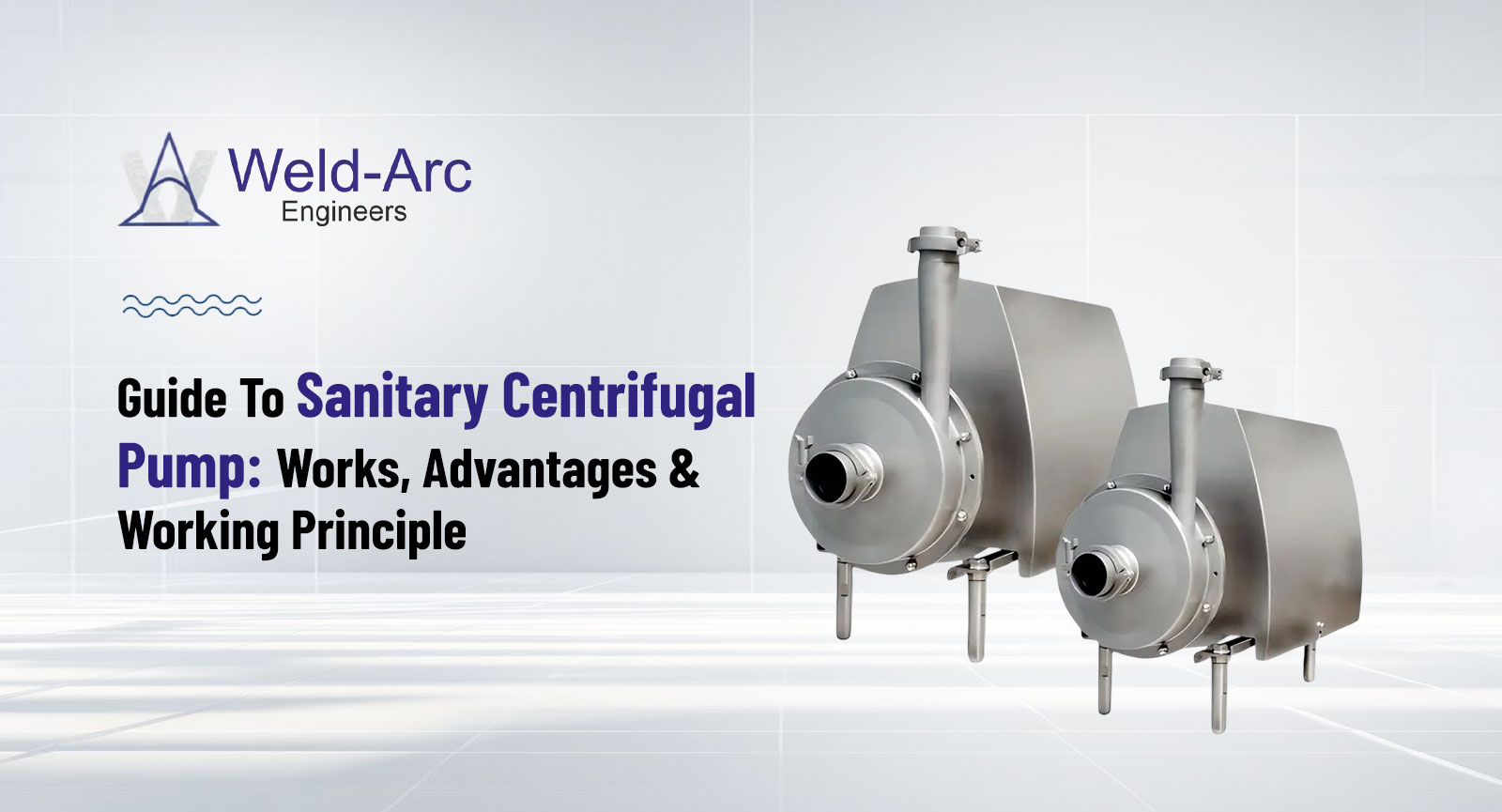
In food and medicine production, contamination is a nightmare. If a pump isn’t perfectly clean, you have to shut down and throw away the product. Sanitary centrifugal pumps solve this by being designed specifically to stay clean and move liquids safely.
Why They Are Different
These pumps are built differently from standard ones:
- Easy to Clean: The inside is smooth stainless steel. No corners for bacteria to hide.
- Won’t Leak: Strong seals keep the product in and everything else out.
- Self-Cleaning: You can clean them right on the production line without taking them apart.
Using these pumps means you get safe products, less downtime, and a clean factory.
Working Principle of a Sanitary Centrifugal Pump
Think of a centrifugal pump as the “heart” of a food or beverage production line. It’s designed not just to move liquid, but to do it cleanly, gently, and without giving bacteria a place to hide.
Here is a more human, “real-world” breakdown of how these machines actually get the job done.
- The Spin-Up: It starts with an electric motor. This motor spins a component called an impeller (essentially a high-speed fan or paddle wheel) inside the pump’s housing.
- The “Eye” of the Storm: Liquid is pulled into the center of that spinning impeller; we call this the “eye.” Because the impeller is already moving fast, the sanitary centrifugal pump grabs the liquid immediately.
- The Great Escape: As the impeller spins, centrifugal force kicks in. It flings the liquid outward toward the edges of the pump casing. This converts the energy from the motor into speed (velocity).
- The Smooth Exit: The shape of the outer casing (the volute) catches that fast-moving liquid and funnels it toward the outlet. As the path widens, the speed slows down slightly, which builds up the pressure needed to push the liquid through the rest of your pipes.
Main Components That Ensure Hygienic Performance
- Impeller – A sanitary centrifugal pump creates the force required for liquid transfer
- Pump casing – guides flow while maintaining smooth surfaces
- Mechanical seal – prevents leakage and outside contamination
- Motor assembly – provides steady rotational power
- Sanitary inlet and outlet connections – support safe integration with pipelines
Advantages for Modern Processing Industries
Think of a sanitary centrifugal pump as the reliable “workhorse” of a clean production line. It’s not just a piece of machinery; it’s a commitment to keeping your product pure and your business running smoothly.
Why It’s the Right Choice for Your Team
Choosing this pump isn’t just about moving liquid; it’s about making your workday easier and your final product better.
- Passing the Test: These pumps are built to meet the strictest health and safety rules, so you can stop worrying about surprise inspections and focus on your craft.
- Steady as She Goes: Unlike pumps that “throb” or “chug,” a sanitary centrifugal pump gives you a smooth, constant flow. This means your bottles fill perfectly every time without a mess.
- Clean in Record Time: Because they are designed to be “Clean-in-Place” (CIP), your team spends less time scrubbing parts by hand and more time actually producing.
- Easy on the Wallet: These are simple, tough machines. They use less power and rarely break down, which means more money stays in your pocket over the years.
- Protecting Every Drop: With high-grade seals and polished steel, you don’t have to worry about leaks or germs. Your product stays exactly how it was meant to be, pure and safe.
Applications Across Hygiene Sensitive Sectors
A Sanitary centrifugal pump is widely used wherever clean and controlled liquid transfer is required.
Common industry uses:
- Food and beverage processing lines
- Dairy and milk handling systems
- Pharmaceutical manufacturing units
- Cosmetic and personal care production
- Biotechnology and specialty chemical processing
Its consistent performance makes the Sanitary centrifugal pump essential for maintaining purity and production reliability.
Types of Centrifugal Pumps
1. Single-Stage Pumps (The All-Rounder)
Think of this as your “daily driver.” It uses one impeller (a rotating blade) to move liquid.
- Best for: Moving simple liquids like water, juice, or milk from Point A to Point B.
- Why choose it: They are simple to maintain, cost-effective, and handle high flow rates beautifully.
2. Multi-Stage Pumps (The Powerhouse)
When you need to push liquid uphill or through a very long filtration system, a single blade won’t have enough “kick.” Sanitary centrifugal pumps use a series of impellers to build up pressure.
- Best for: High-pressure tasks like Reverse Osmosis (RO) or feeding a boiler.
- Why choose it: It provides the “muscle” needed for heavy-duty pressure without requiring a massive, oversized motor.
3. Self-Priming Pumps (The Problem Solver)
Standard pumps hate air; if air gets into the line, they often stop working (this is called “losing prime”). Self-priming pumps are designed to clear that air and get back to work automatically.
- Best for: Emptying tanks from the top or handling liquids that have a lot of bubbles/foam.
- Why choose it: They offer flexibility. You can install them above the liquid level without worrying about the pump “choking” on air pockets.
Conclusion
Think of a sanitary centrifugal pump as the reliable heartbeat of your production line. It uses a spinning blade to move liquids quickly and smoothly, but its real magic is in its “clean” design; there are no hidden nooks for bacteria to grow, which keeps your product safe and your inspectors happy. With trusted solutions from Weld Arc Engineers, choosing a pump that is easy to take apart and wash means spending less time on cleaning and more time focusing on productivity and meeting your production goals.

Weld-Arc Engineers
Weld‑Arc Engineers is a trusted supplier and distributor of industrial products for sectors like oil & gas, pharmaceuticals, water treatment, and more. The company offers a wide range of solutions, including valves, gaskets, pumps, and welding equipment from leading brands like Crane Saunders and ESAB, with a strong focus on quality and customer service.