


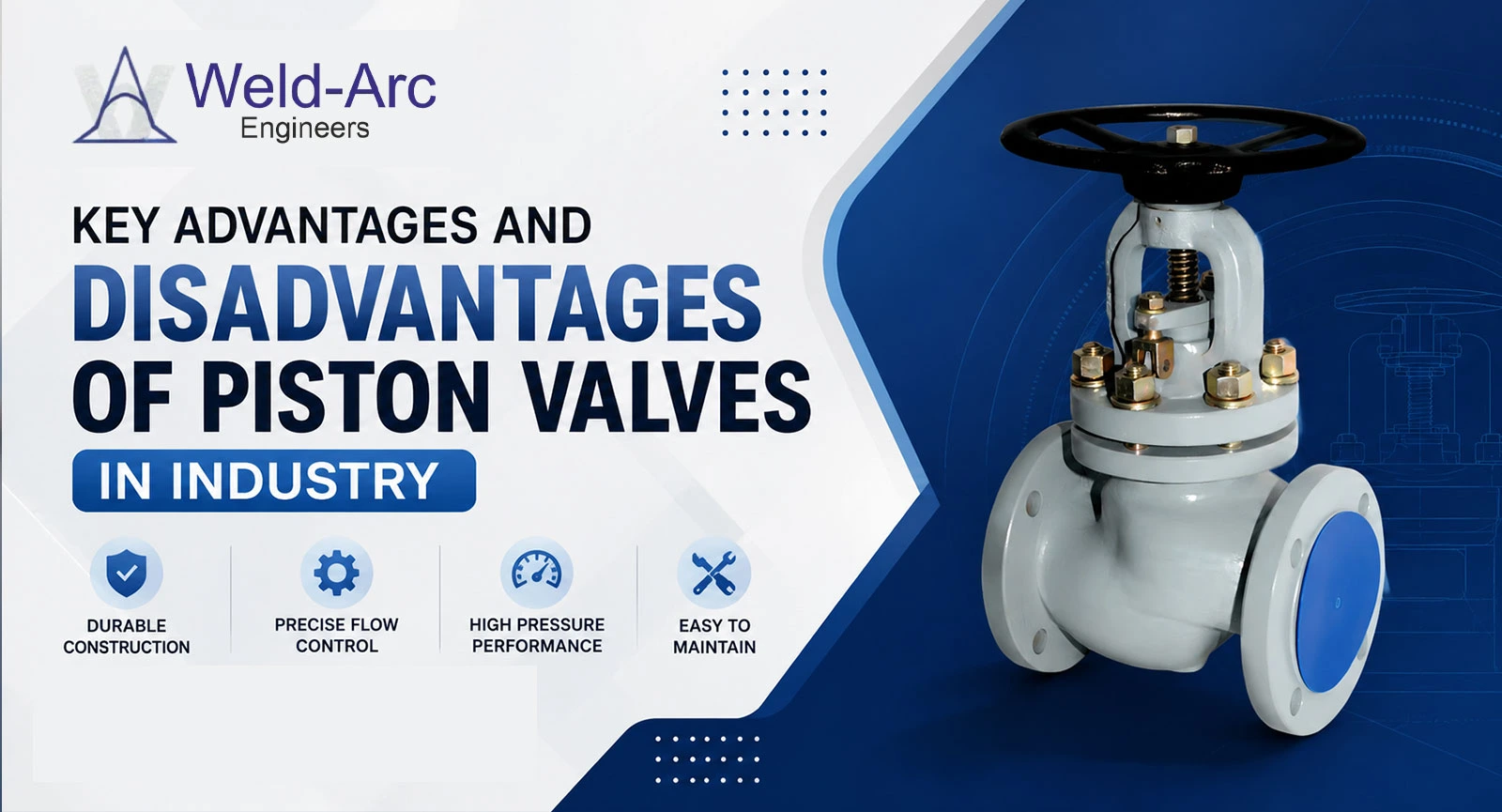
In most industrial setups, controlling the flow of steam, gas, or liquid is not something you can ignore. Everything depends on how smoothly and safely that flow is handled. One component that is often used in such conditions is the Piston Valve. This valve is used where normal valves cannot handle pressure or heat. It works with a simple idea: a piston moves inside the valve body to open or block the flow. When it closes, it seals tightly, which is why industries trust it in systems where even a small leak can cause trouble. You’ll usually find it in steam lines, power plants, chemical units, and heavy machinery systems. It’s not the type of valve you see in everyday, simple pipelines. It’s more of a heavy-duty work kind of equipment. But like any industrial part, it has both good sides and limitations. And understanding both helps you decide when it should be used.
How a Piston Valve Works
The working of this valve is actually very simple once you picture it. Inside the valve, there is a piston that moves up and down inside a chamber. Its working is very simple:
- When the piston moves up → flow is allowed
- When it moves down, → flow is blocked completely
There is no complex mechanism, just a controlled sliding motion. This design is what gives the Piston Valve its strong sealing ability. It doesn’t rely on a soft seal that can wear out quickly. Instead, the tight fit of the piston helps it handle pressure better. Because of this, it is often chosen where steady control is more important than frequent opening and closing.
Where a Piston Valve Works Best
This valve is not something you use everywhere. It is mainly used in systems where conditions are tough. You’ll commonly find it in:
- Steam distribution systems
- Power generation plants
- Chemical processing units
- Oil and gas pipelines
- Industrial heating systems
In all these places, pressure and temperature are usually high, and reliability matters more than cost. For example, in a steam line, even a small leakage can reduce efficiency. That’s where this valve performs well because it seals tightly and holds pressure properly.
Advantages of Piston Valve
People prefer this valve in heavy systems because it offers practical benefits:
- Tight sealing reduces leakage issues
- Handles high pressure and temperature easily
- Works well with steam, gas, and liquids
- A long working life, when maintained properly
- Gives stable and predictable flow control
This valve is dependable. Once installed correctly, it usually runs smoothly for a long time without major issues.
Disadvantages You Should Know
Even though the Piston Valve is strong, it’s not perfect. Some of the limitations to consider are:
- It is more expensive than basic valve types
- Needs regular maintenance to stay efficient
- Not useful for simple low-pressure systems
- Installation takes more time and effort
- Slightly more complex than standard valves
So, it’s not always the best choice if the system is simple or the budget is limited.
Conclusion
A Piston Valve is built for heavy industrial work. It performs best where pressure is high, and leakage is not acceptable. That’s why industries trust it in compelling systems. But it’s not a component that can fit everywhere. For small or simple pipelines, it can be more than what is actually needed. The actual decision comes down to understanding your system. If the work is heavy-duty, it fits well. If not, a simpler valve might be more useful in such areas. Brands like Weld Arc Engineers are often preferred in the industry for providing reliable and durable valve solutions.
FAQ’s
1. What is a piston valve used for?
It is used to control the flow of steam, gas, or liquid in systems where strong sealing and pressure handling are needed.
2. Why is a piston valve preferred in industries?
Because it handles high pressure well and reduces leakage, making systems safer and more stable.
3. Where is a piston valve commonly used?
It is used in steam plants, chemical industries, power stations, and oil and gas systems.
4. Does a piston valve need maintenance?
Yes, regular maintenance helps it work smoothly and increases its life.
5. Can a piston valve be used in simple systems?
Not really. It is mainly designed for heavy-duty industrial use, not simple low-pressure systems.

Weld-Arc Engineers
Weld‑Arc Engineers is a trusted supplier and distributor of industrial products for sectors like oil & gas, pharmaceuticals, water treatment, and more. The company offers a wide range of solutions, including valves, gaskets, pumps, and welding equipment from leading brands like Crane Saunders and ESAB, with a strong focus on quality and customer service.