


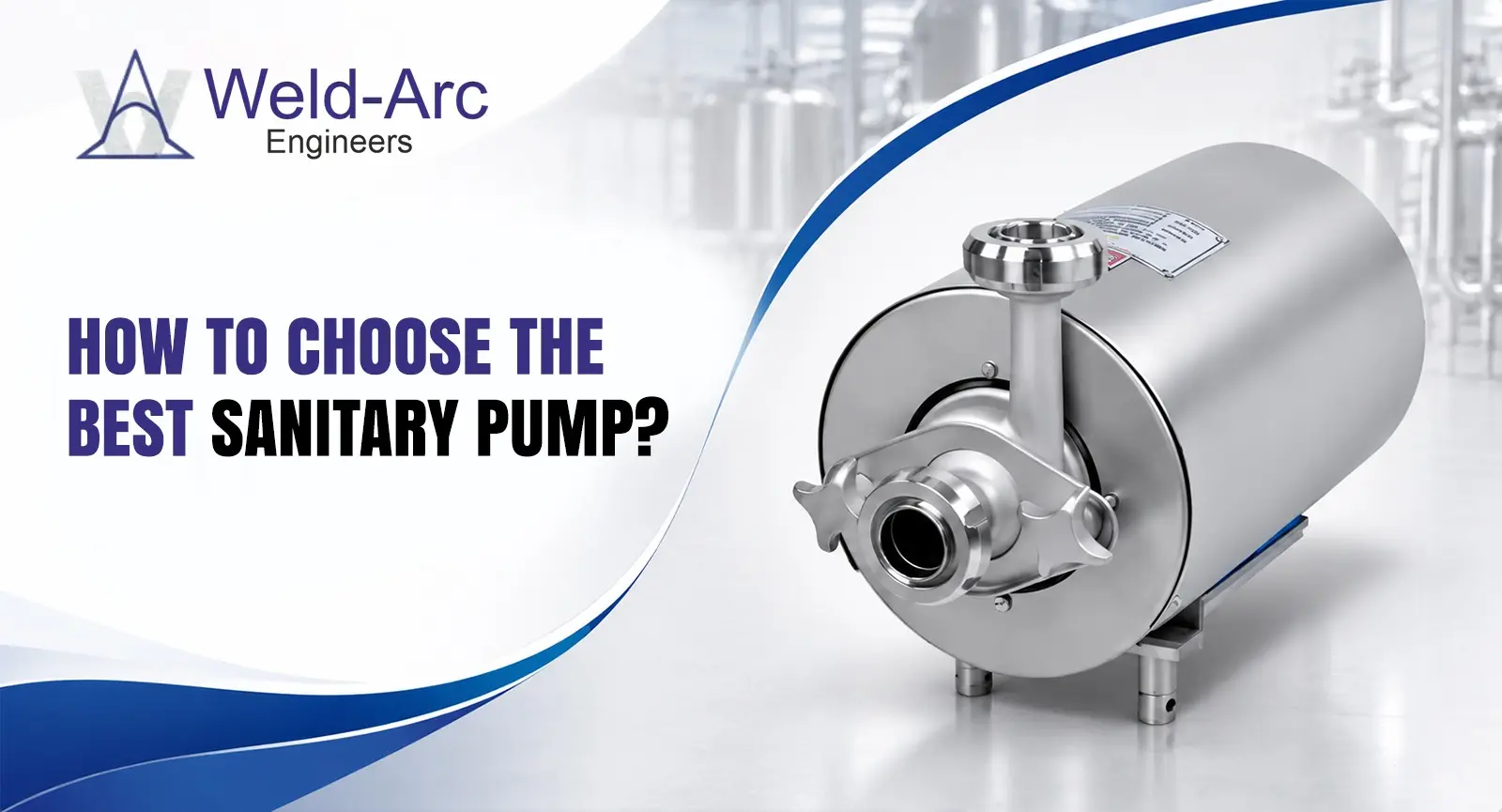
Quick Summary
A sanitary pump is built to move food, drink, pharma and cosmetic products without contaminating them and to be cleaned quickly and fully. The best one for you depends on your product, its thickness and temperature, the flow you need, your cleaning method and the standards you must meet. This guide explains the pump types, key checks and common mistakes in plain words, so that you can choose with confidence.
Table of Contents
Why a Sanitary Pump Is Different
Most plants have a few pumps that nobody thinks about, until one of them causes trouble. In a dairy, a bakery or a pharma unit, that trouble can be serious: a trace of leftover product, a worn seal shedding tiny pieces, or a rough surface where bacteria can hide. Any of these can spoil a batch, and some can trigger a recall.
An ordinary industrial pump is made to move liquids, and that is all. A sanitary pump, also called a hygienic pump, is made to move liquids cleanly. Its surfaces are smooth, its parts are easy to take apart, its materials are safe for contact with food and medicine, and it can be washed in place without being dismantled.
That difference is why picking the right one matters so much.
Where Sanitary Pumps Are Used
- Dairy: milk, cream, yoghurt, paneer and ice cream mixes.
- Beverages: juice, soft drinks, beer, wine and bottled water.
- Food processing: sauces, syrups, purees, edible oils and pastes.
- Pharmaceutical and biotech: liquids, syrups, creams and process fluids.
- Cosmetics and personal care: lotions, gels and shampoos.
- Confectionery and bakery: chocolate, fillings and glazes.
Main Types of Sanitary Pumps
Different products need different pump designs. Here are the common ones.
- Centrifugal pump: the most common type. It spins an impeller to move thin, free-flowing liquids such as milk, juice and water. It is simple, efficient and gives high flow.
- Rotary lobe pump: two lobes turn against each other and move the product gently. It handles thick products and soft solids, and it is kind to delicate liquids.
- Progressive cavity pump: a screw-shaped rotor turns inside a rubber housing. It suits very thick, sticky or lumpy products, such as fruit pulp and pastes.
- Twin screw pump: two screws move the product smoothly. It is useful for viscous products and gentle handling.
- Air-operated diaphragm pump: it uses compressed air and flexible diaphragms. It can run dry, handles solids and is suitable for transfer from drums and tanks.
- Peristaltic pump: it squeezes a hose to move the liquid, so the product only touches the hose. It is good for small flows and dosing.
- Piston or dosing pump: it delivers an exact volume with each stroke, useful for filling and dosing.
There is no single best type. The best one is the one that suits your product.
Key Factors in Choosing the Right Sanitary Pump
Start with these questions.
- What is the product? Its name, thickness (viscosity) and whether it contains solids or fibres.
- Is it shear sensitive? Cream, yoghurt and some sauces can break down if pumped roughly. A lobe or similar gentle pump may be better.
- What is the flow rate? How much do you need to move per hour?
- What pressure or head is needed? Consider the pipe length, height and fittings.
- What is the temperature? Hot fluids, and hot cleaning cycles, affect materials and seals.
- What is the suction condition? Check the suction lift and the available suction pressure. Poor suction leads to cavitation, which damages the pump and the product.
- Is the product abrasive or sticky? This affects wear and cleaning.
- How will you clean it? Manual cleaning, clean-in-place (CIP) or steam-in-place (SIP) each have their own needs.
- What are the rules for your industry? Food, dairy and pharma have different standards.
- What is the duty? Continuous or occasional use.
Write down the answers, and share them with the supplier. A good one will ask these questions before recommending a model.
Materials and Finish That Matter
The surface of the pump decides how easy it is to keep clean.
- Stainless steel: grade 304 suits many food uses. Grade 316L resists corrosion better and is preferred for harsher products, pharma and strong cleaning chemicals.
- Surface finish: a smooth surface leaves less room for product and bacteria. A surface roughness of around 0.8 micrometres Ra or better is common in hygienic equipment, and electropolished surfaces are smoother still.
- Welds and joints: they should be smooth and fully finished, with no crevices.
- Design: the pump should drain fully, with no dead spaces where the product can sit.
- Connections: clamp-type fittings, such as tri-clamp, are common because they are quick to open and clean.
Seals, Elastomers and Cleaning
These small parts cause many problems.
- Shaft seals: mechanical seals are common. Single seals suit many uses. Double seals with a flush liquid add protection for sensitive products.
- Seal faces: hard materials such as silicon carbide resist wear.
- Elastomers (gaskets and O-rings): common choices are EPDM, silicone, PTFE and FKM. Pick the one that matches your product, your temperature and your cleaning chemicals.
- CIP and SIP: check that the pump and its seals can handle hot water, caustic, acid and steam, as used in your plant.
- Food-contact approval: elastomers and other wetted parts should be suitable for contact with food or medicine.
Checking this early saves many seal failures later.
Common Selection Mistakes
- Using a centrifugal pump for a thick, lumpy product.
- Ignoring the suction conditions, which causes cavitation.
- Choosing elastomers that cannot take the cleaning chemicals or the heat.
- Picking a rough surface finish to save money.
- Using a pump that is too large, so that it runs far from its best point.
- Overlooking dead legs in the pipe layout.
- Forgetting how the pump will be cleaned and taken apart.
- Choosing on price alone, without thinking of the cost of downtime and spoilage.
Sanitary Pump Maintenance Tips
- Clean the pump after every run, as per your cleaning procedure.
- Check seals, gaskets and O-rings regularly, and replace them on schedule.
- Look for leaks, noise and vibration, which are early warning signs.
- Check clamps and connections for tightness.
- Use the correct lubricants, approved for food contact where needed.
- Keep spare seals and gaskets in stock.
- Record cleaning, inspections and repairs.
- Train staff to dismantle and reassemble the pump correctly.
Conclusion
Food and beverage plants, pharma units, project contractors and dealers often need several pumps, along with spares. In that case, it is wise to work with a sanitary pump manufacturer and supplier who can provide documentation, spare parts and technical advice. Ask about the surface finish, material certificates, test records, delivery time and warranty before you place the order. If you are looking for a dependable partner for hygienic pumping equipment, Weld-Arc Engineers supplies hygienic pumps built for food, dairy and pharma use.
Frequently Asked Questions
What is a sanitary pump?
It is a pump designed for hygienic duty, with smooth stainless steel surfaces, easy-to-clean design and materials safe for contact with food, drink and medicine.
What is a hygienic pump used for?
It is used to move products such as milk, juice, sauces, creams and pharmaceutical liquids in dairy, food, beverage, pharma and cosmetic plants.
What is the difference between a sanitary pump and an industrial pump?
A sanitary pump has smooth surfaces, no dead spaces, food-safe materials and can be cleaned in place. An industrial pump is not made with these hygienic needs in mind.
What are the types of hygienic pumps?
Common types include centrifugal, rotary lobe, progressive cavity, twin screw, diaphragm, peristaltic and piston pumps.
Which sanitary pump is best for thick or viscous products?
Rotary lobe, progressive cavity and twin screw pumps are usually better for thick or lumpy products than centrifugal pumps.
What material is used for sanitary pumps?
Most are made of stainless steel, commonly grades 304 and 316L, with food-grade elastomers such as EPDM, silicone, PTFE or FKM.
What does CIP mean for a sanitary pump?
CIP means clean-in-place. It is a cleaning method in which cleaning liquids flow through the pump and pipes without taking them apart.
How do I choose the right sanitary pump?
Check your product, its thickness and solids, the flow and pressure, the temperature, your cleaning method and the standards you need. Then match them to the right pump type.

Weld-Arc Engineers
Weld‑Arc Engineers is a trusted supplier and distributor of industrial products for sectors like oil & gas, pharmaceuticals, water treatment, and more. The company offers a wide range of solutions, including valves, gaskets, pumps, and welding equipment from leading brands like Crane Saunders and ESAB, with a strong focus on quality and customer service.